"I am the spectator / I can see the world passing by from here / I am just a child to a man, back to the dust where I began / I was never even here at all" - The Spectator, The Bravery

Sol Yarma
She/they. 18. 162cm.
Determined, callous, and a little hyper, Sol grew up in two households—a poor family of eleven people and the other a fairly well-off one consisting of herself, an adopted brother, and two lesbian parents. In both, she learned very quickly how to be sneaky and dishonest in order to have the tiniest ounce of control. Emotions are not her strength, though her ability to imitate care and a general sense of humanity is well-regarded and people do find her a comforting presence. She is genuinely interested in the lives of others and is an extrovert to her core—she just sometimes comes across as a bit too much, or too nosy, and it can drive people away. This is why she loves parties—she can just hold a drink in her hand and people will forgive her. It's also why she loves lonely, stuck-up people—they are dying for somebody to be as nosy as she is.
She is quite fit from the countless treks she's taken around her neighbourhood on foot, simply for the thrill of remaining unseen by the unfortunate victims of her stalking. She's a bit of a pervert and her voyeuristic desires are about the only thing that makes her feel what are, to her, real emotions, or simply real, understandable control over her life. Sol rarely thinks of consequences and knows she can get out of anything. She will be late to job interviews, forget to call people on their birthdays, but mysteriously these incidents usually have no impact whatsoever on her ability to get what she wants. You'd think she would understand how this works, but she doesn't. Sol doesn't think of herself as particularly pretty or skilled or unique. She's just lucky. Too lucky.
"You come here to me / We'll collect those lonely parts and set them down / You come here to me" - Leif Erikson, Interpol
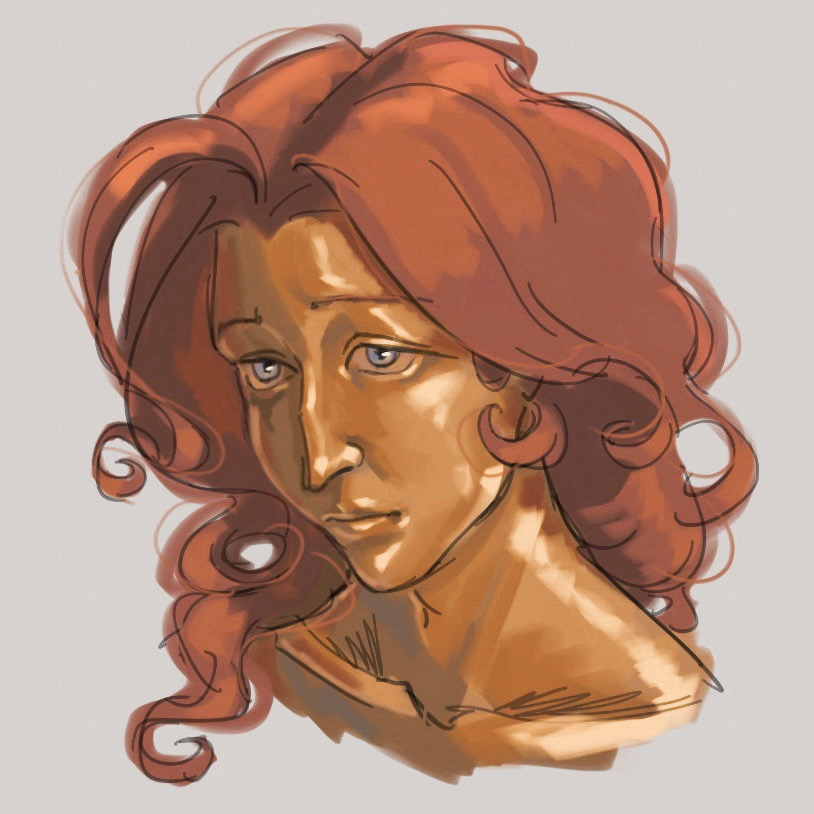
Lucio
They/them. Indeterminable. 184cm.
A trumpet turned human. With skin made of brass and no genitals, it was immediately decided upon their first transformation that the public should never know about them. What else were they meant to do? It was too risky and not worth it to let them out. However, Lucio's forced isolation directly frustrates their need to be part of a group, an orchestra. Although they are naturally curious and quite romantic, always showing an excitable, innocent and caring attitude towards those they love, Lucio is often triggered by the outside world and overcome with pure, seething envy. Being with Sol is perfect, as Lucio has grown accustomed to their one-on-one, private life, where Sol pays attention to only them all the time, but when they realise that there are actual humans, with similar traits to them, having fun outside and dressing up and having food and experiencing everything Lucio has never even dreamt of, in huge groups of friends, Lucio cannot bear to even consider that they are alive just like all those real humans. It's all because of how they look. It's all because they have no genitals, no sexual desire. They will never be able to have fun in any context other than with Sol, who brings them clothes and fun activites, in a locked room, watching what goes on outside. They love Sol, they love her company, they love her house. But they feel this dreadful lack constantly, and it makes them want to die. What is even the point of being alive, if they cannot do anything?
Because of their isolated life and past experiences with terrible people, they're very anxious. A rose petal landing on the floor will startle them, and a hair falling from their head might cause a hypochrondriac-like fear that they are dying (or coming to life). Despite their sensitivty to most human things, they have a lovely voice, and are not afraid to use it to make ear-piercing exclamations or hum happy tunes.
"I can get by now / I'm not really dead but I really needed someone to save me / Leaving me alone to die / Is worse than having the guts to kill me" - 15, Marilyn Manson
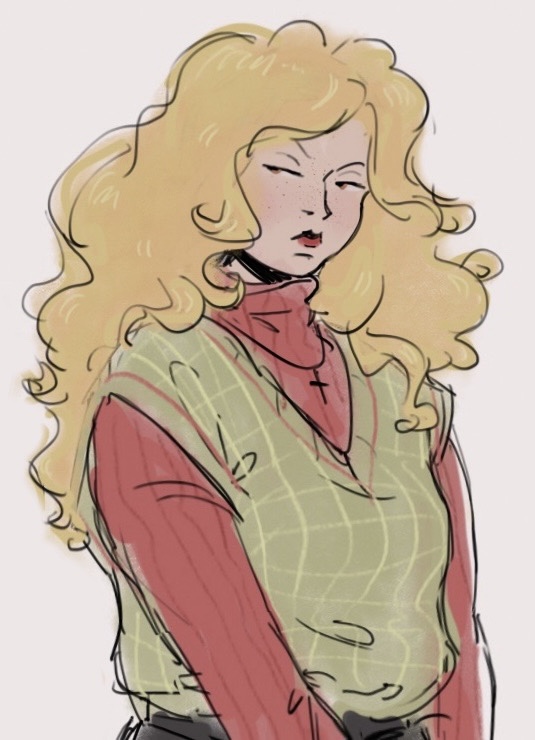
Mary Mae
She/her. 19. 168cm.
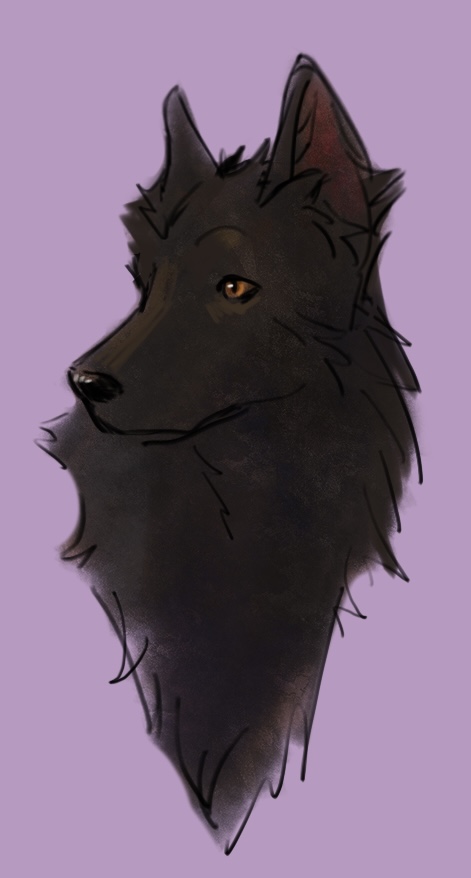
Some traits that make up Mary's personality are: stoic, easily irritable, a homebody, and empty, empty, empty. She only eats to fill this void. Mary is familiar with loss, which seems funny considering she only has one friend (Sol), but the main reason she is so self-sufficient is due to the death of her parents. Her grandfather and the eight dogs are still around, but now they sometimes feel fake, fleeting and empty too. The only life form she spends considerable amounts of time with is her favourite dog—a 7-year-old German Shepherd by the name of Umbra. Mary is the best clarinet player in the state. She does come across as stuck-up to most people. Truly, just a little bit, though she feels so much guilt and sadness and self-hatred, she does think that everyone else is a bit beneath her.
Mary has the unusual ability to communicate with trees. When she was a child, she lived in a place beside the woods, and one day one of the trees decided to grow into her home. It lifted the earth outside, broke the walls and made the floor crack, and hung over the roof so Mary never saw any sunlight. Mary's room was the main victim of this tree so she grew quite accustomed to it. Her parents were poor, and could not afford to have the tree removed nor the house fixed, so they let it stay, albeit angrily. One night, a man broke into Mary's room while everybody was asleep. The intruder assaulted 13-year-old Mary, and while it was lucky that her parents woke up in time to force the intruder to flee, the assault still happened and Mary was traumatised both physically and mentally. However, when she dares to remember that event, she has no recollection of a human in her room or on her bed. Instead, she believes the tree did something to her—the tree's roots wrapped around her limbs, a branch scratched at her underwear, and it chose her because she was special. Ever since then, Mary has been able to recieve messages from trees, such as warnings of the future, and they protect her from harm. When Mary dies, she wants to be placed inside a hollow tree trunk and left there until it wraps her up and finally erases her humanity. Mary has never felt human, not even before that night. The tree raped her because it was her destiny, and she is forever grateful.